From the editor
What's coming — and what it means for you
Future question What shifted this month — and why should you care this week?
October was a month of visible money and invisible consequences. We followed both.
October 2026 was loud about politics and quiet about mechanics. Campaign committees moved nine-figure sums, a police union picked a fight with a state Supreme Court justice, and a federal judge opened an inquiry into how the government behaved in court. The headlines were about who wins. The mechanics were about who gets heard.
Underneath, the month was about institutions deciding how to live with new tools. A hospital system walked away from a replacement plan. A university system took money to put student reporters into local newsrooms. Faith leaders met behind closed doors about AI sermons. None of these made a splash, and all of them will shape what your town looks like in three years.
So this issue is organized around consequence rather than spectacle. For each story we name what is coming, then what it means for you — a bill, a commute, a school, a skill, a safety habit. Succeeding as a human in the years ahead is less about predicting the future than about reading the present carefully enough to act on it.
We also kept the jokes. A monthly magazine that cannot laugh at a 58-minute presidency claim is not paying attention.
Thank you for reading, and for sharing what we should be paying attention to next.
Civic decisions
What's being decided
Future question → story → impact on you
Future question What's being decided next?
This section watches the machinery of accountability: who investigates whom, who funds whom, and which ballots carry more than they appear to. October showed courts, unions, and prosecutors all testing the edges of their power.
In this section
Impact on you What may change at your school, bill, street, or job
A Police Union Picks a Fight With a State Supreme Court Justice
What's being decided
A retention election becomes a test of whether unions can signal intent to judges without winning.
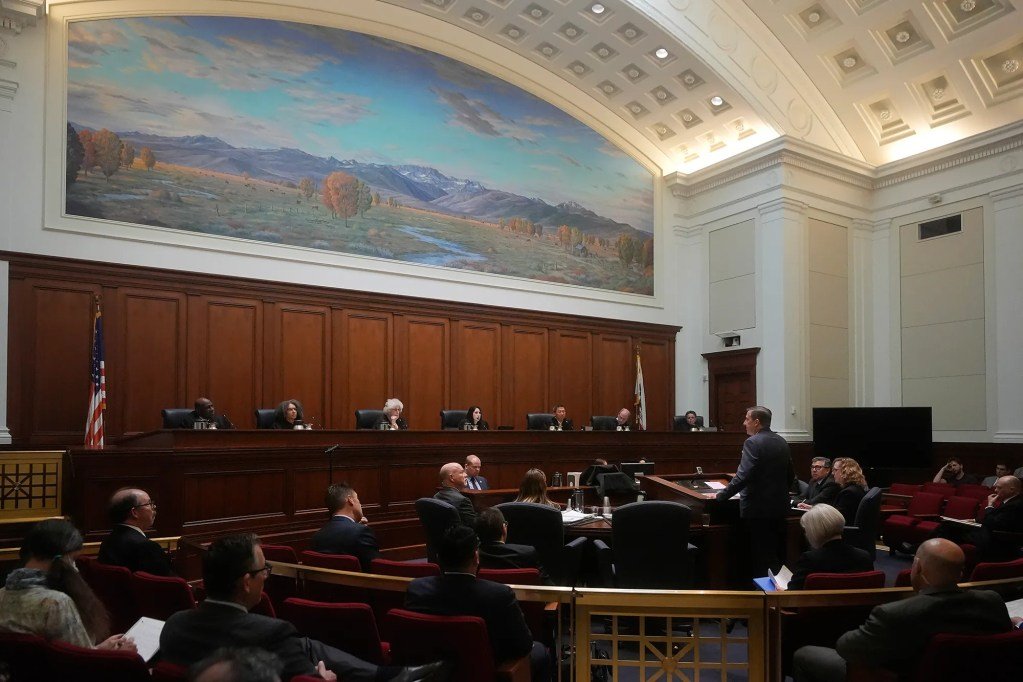
The Peace Officers Research Association of California is campaigning against Justice Kelli Evans in her retention election, arguing she is moving to reopen criminal cases the union believes should stay closed. PORAC's own leaders concede the effort probably will not succeed. That admission is the story: the goal is not removal but a message that the union is watching how judges interpret the law.
The campaign deliberately echoes 1986, when a retention election removed three California justices. That history gives the tactic weight even when the math does not. Retention elections are usually quiet, low-information affairs where most voters default to yes. A well-funded “no” campaign does not need a majority of the electorate — it needs enough confusion to turn a routine check into a contested one.
For readers, the practical effect is that a down-ballot race most people skip will now carry organized money and a clear argument. That is either healthy accountability or pressure on judicial independence, depending on your view. Either way, it is no longer a race you can safely ignore.
Candidates Quietly Package Attack Lines for Outside Advertisers
What's being decided
A campaign-finance workaround puts prewritten messaging in the hands of independent spenders.
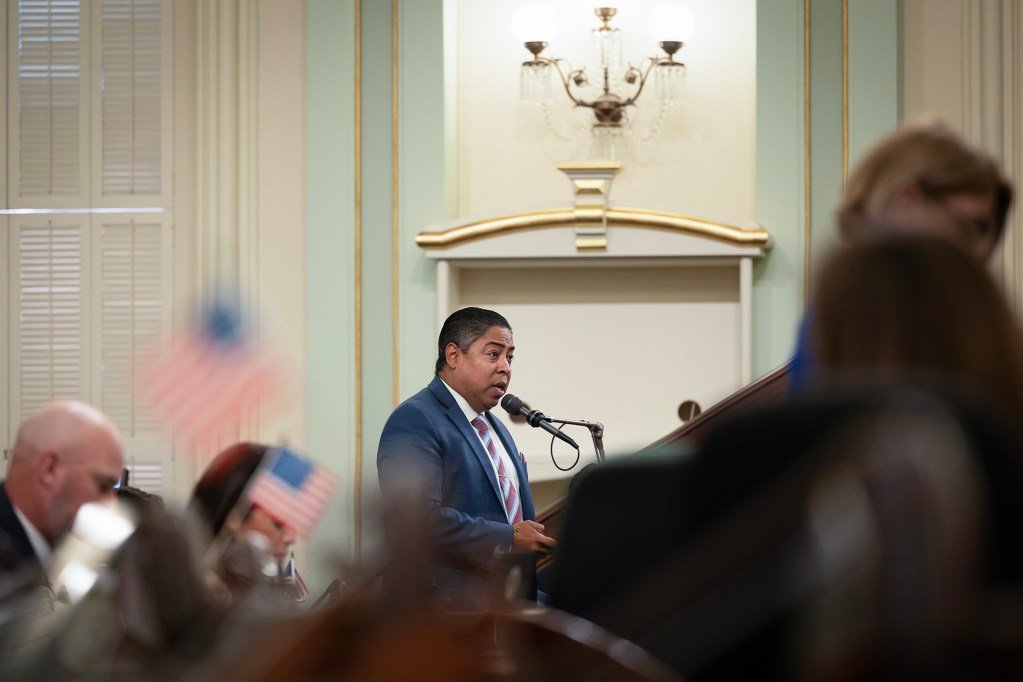
A CalMatters review of legislative campaign websites found at least 14 candidates posting detailed messaging in formats easy for independent spending committees to reuse in ads. The practice is known as red boxing. Experts and watchdogs say it appears to conflict with state campaign finance rules, and CalMatters identified at least three cases where outside groups ran digital ads mirroring the candidates' prewritten messages.
The mechanism matters more than any single race. Campaign finance law limits coordination between candidates and independent committees. Red boxing is a way to coordinate without a phone call: publish the script, let the committee pick it up. If the practice spreads, the legal fiction that separates campaigns from outside money becomes thinner than it already is.
California's legislative races are often decided in low-turnout primaries where a few thousand dollars of digital advertising can move a result. That makes the workaround more consequential here than in states with bigger electorates and louder media markets.
A Judge Opens an Inquiry Into the Government's Conduct in Court
What's being decided
A federal judge orders a formal look at whether the court was misled about a municipal golf course.
A federal judge has ordered a formal inquiry into how Trump officials handled the East Potomac case, including whether the court was misled about plans for the municipal golf course. The move escalates scrutiny of the government's conduct in a dispute that began as a local land-use fight.
The significance is procedural. Courts rarely open inquiries into whether the government misrepresented its plans. When they do, it signals that a judge believes the record may not be trustworthy. That has implications beyond one golf course: it sets a marker for how other judges may treat similar representations in other cases.
For the public, the case is a reminder that the courtroom is one of the few places where the executive branch must answer questions under oath and on the record. The inquiry is not a verdict. It is a process worth watching because it tests whether that accountability still functions.
Work & money
What's coming for jobs and costs
Future question → story → impact on you
Future question What's coming for jobs and costs?
This section watches the money and the institutions that move it: campaign cash, crypto heists, hospital systems, and the small businesses that hold neighborhoods together. October showed how quickly capital can arrive and how slowly institutions respond.
In this section
Impact on you What to watch in your paycheck, rent, or business
An AI Super PAC Retreats as Donors Walk
What's coming for jobs and costs
A $100 million political committee scales back before it ever spent big.
Leading the Future, an AI-industry political action committee, launched with $100 million in pledged support and ambitious goals. According to The San Francisco Standard, it is now holding its funds and losing donors. The retreat is a data point about the gap between announced money and committed money in tech politics.
Pledged support is not cash in the bank. Committees often announce large numbers to signal viability and attract more donors; when the first wave does not materialize, the second wave does not either. The AI industry's political identity is still forming, and this episode suggests it is less unified than the launch suggested.
For voters, the practical takeaway is to discount early fundraising announcements in any race. For workers in tech-adjacent fields, it is a reminder that political spending is a leading indicator of which companies feel exposed — and which do not.
Binance Moves to Cover Losses After a $6.3 Billion Hack
What's coming for jobs and costs
A record crypto theft tied to a state-linked group tests how exchanges handle catastrophic loss.
Binance says it will cover 90% of losses tied to a $6.3 billion hack. Two analytics firms say their intelligence points to a North Korean state-backed group as the likely culprit. The company is attempting to recover the funds and describes the attack as complex.
The scale is the story. A theft of this size is not a technical failure so much as a geopolitical event conducted through code. State-linked actors have learned that crypto exchanges are a high-value, low-friction target: the money moves instantly and the attribution is slow. Binance's decision to cover most losses protects its customers but also sets an expectation that exchanges will absorb losses their security failed to prevent.
For anyone holding crypto, the lesson is about custody. An exchange that promises to cover 90% is telling you that 10% is your risk. That number is a useful way to think about any platform that holds your assets.
Sutter Abandons Its Emeryville Hospital Plan
What's coming for jobs and costs
A replacement for Alta Bates is now uncertain, and East Bay patients inherit the ambiguity.
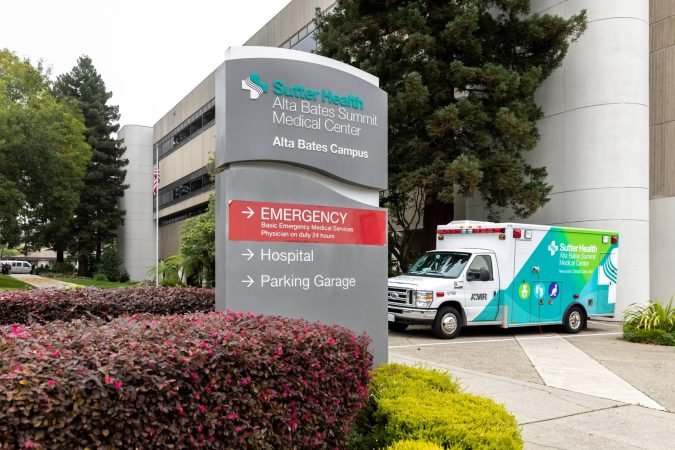
Sutter has dropped its plan for a new Emeryville hospital that was pitched as a replacement for Alta Bates. The company says it will look at other East Bay locations and hopes to keep Alta Bates open until a new facility is built. The announcement leaves the region without a confirmed replacement timeline.
Hospital capacity is a slow-moving crisis that becomes fast-moving in an earthquake. Alta Bates sits on a campus with seismic vulnerabilities, and the replacement plan was the region's answer to that risk. Abandoning the plan does not create an immediate problem, but it extends the period in which the region's emergency capacity depends on a facility that was supposed to be retired.
For residents, the practical question is which hospital will take you in an emergency five years from now. That is not a rhetorical question. It determines ambulance routes, insurance networks, and where your doctor has admitting privileges.
Schools & households
What the next generation is absorbing
Future question → story → impact on you
Future question What will schools and families face next?
This section watches how people learn, who pays for it, and what institutions teach when the curriculum is contested. October brought money for student journalism and a clearer picture of how elections shape health policy.

In this section
Impact on you What this means if you parent, teach, learn, or pay tuition
A $250K Grant Puts Student Reporters Into Local Newsrooms
What the next generation is absorbing
Lumina and the Center for Community News fund a CSU reporting hub.
The Lumina Foundation committed $150,000 and the Center for Community News added $100,000 to support the California Center for Community News, a hub launched last year for CSU reporting programs. Students work with local news organizations as reporters, building multimedia skills while covering their own communities.
The grant is small relative to the problem it addresses. Local news has been contracting for two decades, and the communities most affected are often the ones with the least coverage. Student reporters do not replace professional newsrooms, but they can cover school boards and city councils that would otherwise go unwatched.
For students, the program is a rare path from classroom to byline with a paycheck or credit attached. For residents, it is a chance to have local government covered by people who live there and will face the consequences of the decisions they report on.
What the Midterms Could Do to American Health Care
What the next generation is absorbing
Control of Congress determines whether health policy accelerates or stalls.
STAT interviewed more than two dozen government and private-sector leaders, consultants, lobbyists, and staffers about the health stakes of the midterms. Depending on which party controls Congress, outcomes could slow policymaking and increase investigations, or accelerate a legislative agenda.
The binary is starker than it sounds. Divided government tends to produce oversight hearings and stalled bills; unified government tends to produce rapid changes to reimbursement, drug pricing, and insurance rules. For patients, the difference shows up in premiums, formularies, and which clinics stay open.
The story is a reminder that health policy is not abstract. It is the difference between a medication you can afford and one you cannot, between a rural clinic that stays open and one that closes. The midterms are the lever.
Faith Leaders Wrestle With AI Behind Closed Doors
What the next generation is absorbing

Clergy debate AI-generated sermons and the place of machines in religious life.
Clergy gathered privately at the University of San Francisco to discuss artificial intelligence and its place in religious life. The conversations, held without press access, touched on practices such as AI-generated sermons. The episode captures a broader reckoning among institutions of faith over how to engage emerging technology.
The closed-door format is itself instructive. Institutions that shape moral language are deciding how to talk about AI before they talk about it in public. That sequence — private deliberation, then public doctrine — is how most institutions handle new technology, and it is worth watching because religious communities reach millions of people with frameworks for judgment.
For readers, the story is less about sermons than about authority. If a machine can draft a homily, what is the human part of the job? The same question applies to teaching, counseling, and any role where presence is the product.
Tech, climate & systems
What's arriving faster than people think
Future question → story → impact on you
Future question What's arriving faster than people think?
This section watches the physical and financial infrastructure of the future: data centers, satellites, chips, and the deals that fund them. October showed how quickly the AI buildout is reshaping the grid and the balance sheet.
In this section
Impact on you What to prepare for, ignore, or try this month
Tech, climate & systems · 1 / 3
Nvidia Weighs Cosigning a West Virginia AI Data Center Loan
What's arriving faster than people think
A chipmaker considers putting its balance sheet behind a data center project.
Nvidia is considering acting as cosigner on a loan for Nscale's AI data center in West Virginia. The move would put the chipmaker's balance sheet behind the project at a moment when investor confidence in AI spending is uneven.
Cosigning is a strong signal. It means Nvidia is willing to absorb risk if the project fails, which is a way of telling the market that it believes in the demand. It also concentrates exposure: the company that makes the chips would also be underwriting the buildings that house them.
For residents of host communities, data centers mean construction jobs, tax revenue, and a lot of electricity. The question is who pays for the grid upgrades and who bears the risk if the AI boom cools. A cosigned loan makes that question more urgent, not less.
Tech, climate & systems · 2 / 3
Intel's Slide Erases $12 Billion From the Government's Stake
What's arriving faster than people think

A chipmaker's stock drop shows the risk in industrial policy.
Intel's stock fell sharply, cutting roughly $12 billion from the value of the government's holdings in the chipmaker. The company is feeling pressure as AI demand absorbs memory and other components, pushing PC prices higher and weighing on sales.
The government's stake was a bet on domestic semiconductor manufacturing. The bet may still pay off in strategic terms — fabs, jobs, supply-chain resilience — even if the market value falls. But the episode illustrates the difference between industrial policy and investment returns: the public can win on security and lose on the balance sheet.
For consumers, the more immediate effect is in PC prices. When AI demand absorbs memory, the cost shows up in the laptop you buy for school or work. That is a climate-adjacent story because the buildout is driving energy and materials demand across the economy.
Tech, climate & systems · 3 / 3
Satlyt Moves Closer to Turning Satellites Into Orbiting Data Centers
What's arriving faster than people think

A successful test advances the idea of computing capacity in orbit.
Satlyt says it completed a successful test this month that advances its goal of converting spacecraft, beginning with satellites, into virtual data centers. The milestone brings the company closer to offering computing capacity from orbit.
Orbiting data centers are an extreme answer to a real problem: terrestrial facilities need land, water, and power, and those are increasingly contested. Satellites offer solar power and free cooling, at the cost of launch emissions and difficult maintenance. The economics are unproven, but the test moves the idea from speculation to engineering.
For readers, the story is a reminder that the AI buildout is not only about chips and buildings. It is also about where computation happens and who controls the orbit. That is a governance question as much as a technical one.
Business of the month
Who’s building what’s next
Share this showcase: kfn.one/monthly/2026-11#showcase
Future question Who’s building for what’s next — and who should you support or learn from?
A neighborhood bookstore becomes a test of whether a community will defend its institutions.
Featured · November 2026
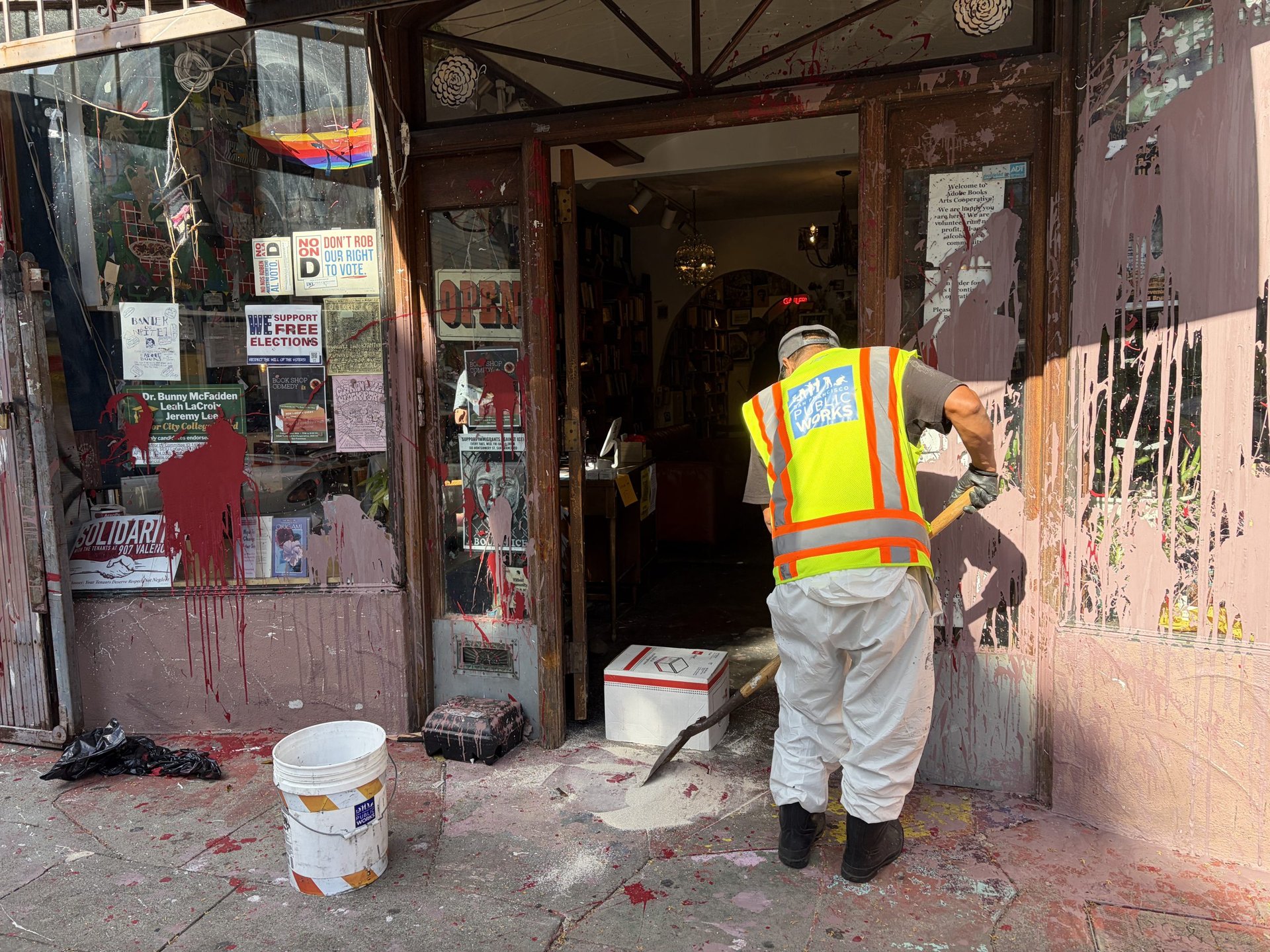
Adobe Books, Vandalized Three Times in Six Days
The 24th Street storefront is more than a shop. It is a living room, a gallery, and a marker of what the Mission District has been.
“Who has it out for Adobe Books?” — the question Mission Local asked, and the one the neighborhood is now asking itself.
Adobe Books on 24th Street was targeted again this week, marking the third act of vandalism at the storefront in under a week. The repeated damage raises questions about who is behind the attacks and what it means for a neighborhood institution.
Bookstores are fragile businesses in the best of times. A few broken windows can erase a month of margin. But the significance of Adobe Books is not its balance sheet. It is one of the last places on the block where a teenager, a retiree, and a visiting artist can end up in the same conversation without a reservation.
The story is small and local, and that is why it belongs in this issue. The institutions that make a neighborhood livable are rarely defended by policy. They are defended by people who show up, buy a book, and say something when the windows break.
Your Voice / Fights
What people are already pushing back on
Future question Where does your voice or action fit?
If you saw something this month that the rest of us missed — a meeting, a notice, a closure — send it in. Tips are how the public record gets more complete.
Reader tips become part of the public record when they are documented: a photo with a timestamp, a link to the agenda item, the name of the official who said it. We verify before we publish, and we credit the people who help us get it right. Send what you have to the KFN tip line; the smallest detail often opens the largest story.
Wind down
How to stay human in all this
October 2026 gave us a 58-minute presidency claim, a Halloween store shooting, and a $6.3 billion hack. We close the month with the jokes we earned.
Future question How do you rest without checking out of what matters?
-
Fifty-eight minutes
Flávio Bolsonaro declared himself Brazil's “true president-elect” for 58 minutes — the shortest administration in history and still longer than some software trials.
-
Halloween economics
A Spirit Halloween in Fairfield became the scariest thing in Solano County, and not because of the animatronics.
-
Crypto custody
Binance will cover 90% of a $6.3 billion hack, which is a generous way of saying “please keep your money with us.”
-
The AI PAC
An AI super PAC raised $100 million in pledges and then discovered that pledges are not money, a lesson every startup learns in its second quarter.
-
Retention election
A police union is campaigning against a Supreme Court justice it admits it probably cannot remove — the political equivalent of leaving a one-star review on a restaurant you will keep eating at.
-
Hospital planning
Sutter dropped its Emeryville hospital plan and said it will look at “other East Bay locations,” which is what everyone says before they look at the same location again.
-
Cheesecake diplomacy
NPR suggested state dinners might work better at the Cheesecake Factory, where the menu has never caused a constitutional crisis.
-
Orbiting data
A company wants to turn satellites into data centers, because the one thing the cloud needed was a longer commute.
-
Red boxing
California candidates are posting attack lines in formats outside groups can copy, which is coordination with extra steps and fewer lawyers.
-
Word of the month
“Cosigner” — the word Nvidia is considering adding to its business card, right under “chipmaker” and above “landlord.”
Mind Floss
Three quick games. Play, check, move on.
Word search, anagrams, and quick logic games.
Bay Area October
Find all words from the word bank (forward or downward).
Word bank
Anagrams
Unscramble each word. Item 2 is the freebie.
- CIVIC (gimme, already in order.)
-
ABOLTL
Answer
BALLOT
-
OTSIPAHL
Answer
HOSPITAL
-
SRTIATN
Answer
TRANSIT
-
UNLOARJ
Answer
JOURNAL
Quick pick
Tap the stronger future signal.
-
Read the retention section of your ballot before you vote.
-
Trust a fundraising number because a press release said it.
-
Move long-term crypto holdings to self-custody.
Dots and crosses
Play against KFN. You are X. you move, then KFN moves.
Your turn (X)
Winner: -
Connect four
Tap a column (▼ above or any hole in that column), KFN drops next.
Your turn
Rock, paper, scissors
Best of three vs KFN. You pick, then KFN picks.
Round 1 · Pick one
You 0 · KFN 0
Mini Sudoku (4x4)
Fill each row, column, and 2x2 box with 1-4.
Answers
Word search: MISSION, HOSPITAL, BALLOT, HACK, TRANSIT, JOURNAL, CLIMATE, VANDAL.
Anagrams: CIVIC, BALLOT, HOSPITAL, TRANSIT, JOURNAL.
Quick pick: 1 Signal, 2 Noise, 3 Signal.
Mini Sudoku: 1 2 3 4 / 3 4 1 2 / 2 1 4 3 / 4 3 2 1.
Come back
Same question next month
What’s coming — and what it means for you
If you see something coming before the headlines do, tell us. The next issue is written from what people are already watching.